Translate

Sunday, August 18, 2013

Fire Water


On Tuesday, August 13, 2013, votes were cast by tribal members to determine the legalization of alcohol sales on the Pine Ridge Indian Reservation. The election results were very close - 1,843 in favor of legalization and 1,683 in opposition.

www.old-picture.com/indians/Indian-Invocation
Historically, liquor was never part of the Plains Indian culture. Some of the southwestern tribes – Aztec, Mayan, Pima, Papago, Apache, and Zuni – fermented corn and cactus and drank the fermented liquid in ceremonies and rituals. The consumption was strictly regulated by the spiritual leaders, and social rules were established governing the intake of alcohol. There is no record in Lakota history of any fermentation of vegetation, grains, or fruit to produce alcoholic beverages. The Lakota believed tobacco to be a sacred connection to the spirit world, and smoked it during ceremonies, offering it to the four corners of the earth, or four winds. A Pipe Carrier was an honorable position within the tribe, one that was passed down through generations.


In the early-to-mid-1800s, British fur traders introduced whiskey, rum, and brandy (known as "fire water" because the high alcohol content could be lit on fire) to the Sioux, making them the last of the American Indian tribes to come into contact with alcohol. This late introduction was partially due to the fact that the Lakota and Dakota Sioux did not like to associate with white people, and also because the American expansion into the western plains happened late in history. However, as the Sioux became increasingly dependent upon the trading business, alcohol consumption became more prevalent in their culture and began to inflict cultural, spiritual, and social damage.

The Lakota who survived the wars, massacres, Small Pox epidemics, and bitter cold winters on the Northern Plains were herded onto reservations throughout South Dakota. After years of fighting, they now watched as their nomadic lifestyle, religion, language, and culture disappeared. Thrown into the confusing world of European colonialism, the warrior spirit was broken, forced into submission, and Lakota men, who had never before touched liquor, discovered a way to numb their pain. And new sicknesses appeared: despair, depression, and alcoholism.

With approximately one hundred fifty years of involvement with alcohol, I believe the Lakota are more susceptible to its intoxicating effects. Scientific studies have been conducted to substantiate this claim – livers have been dissected and compared –  and the results have shown that there is no conclusive evidence to prove that an Indian metabolizes alcohol any differently than a non-Indian. If this is so, why do 63% of most American Indian tribes believe that Indians have a physiological or biological weakness to alcohol that non-Indians do not have? (American Indian and Alaska Native Mental Health Research). Could it be because they have witnessed it or experienced it first-hand? Sometimes familiarity is a better measurement for fact than a scientific study.

In 1645, the Connecticut Colony prohibited the sale of liquor to Indians because of the violent behavior that ensued after alcohol was consumed by the Indians. In 1832, the United States Congress passed a Federal law prohibiting the sale of liquor to “any and all American Indians.” This law was actually requested, and supported, by Indian leaders. In 1953, each tribe within the United States was given the right to regulate alcohol on their reservation. By 1974, only 31.4% of all US reservations had passed a law making the sale of alcohol legal within their borders. Tribes were never coerced into prohibition - they made the choice to keep poison away from their people.

Passed out in border town of White Clay, NE
When the sale of alcohol becomes a reality on the Pine Ridge Indian Reservation, new issues will emerge. Obviously, new laws and regulations governing sales and consumption will need to be introduced and implemented. Taxes will be enacted and regulated. Profit from sales will need to be accounted for and disbursed to designated tribal committees, charities, and organizations.  But what about the obscure subject of defining and promoting safe drinking practices? Drinking and driving? There are no taxicabs on the Reservation. People will drink, and they will drive, and some will die. One argument given in favor of legalization was “they are driving to buy alcohol in other counties anyway and now they won’t have to drive as far.” Unsound rationale.

The inevitable increase in abuse, neglect, and suicide is a complex issue that deserves its own forum and I won’t expound upon that in this post, however, I would like to say that reports about the success of legalization of alcohol on the Rosebud Reservation are misleading. Ask the tribes First Responders, and those who work in the judicial system and at the hospital in Rosebud and they will tell you about the heartbreaking alcohol-related violence that occurs regularly.
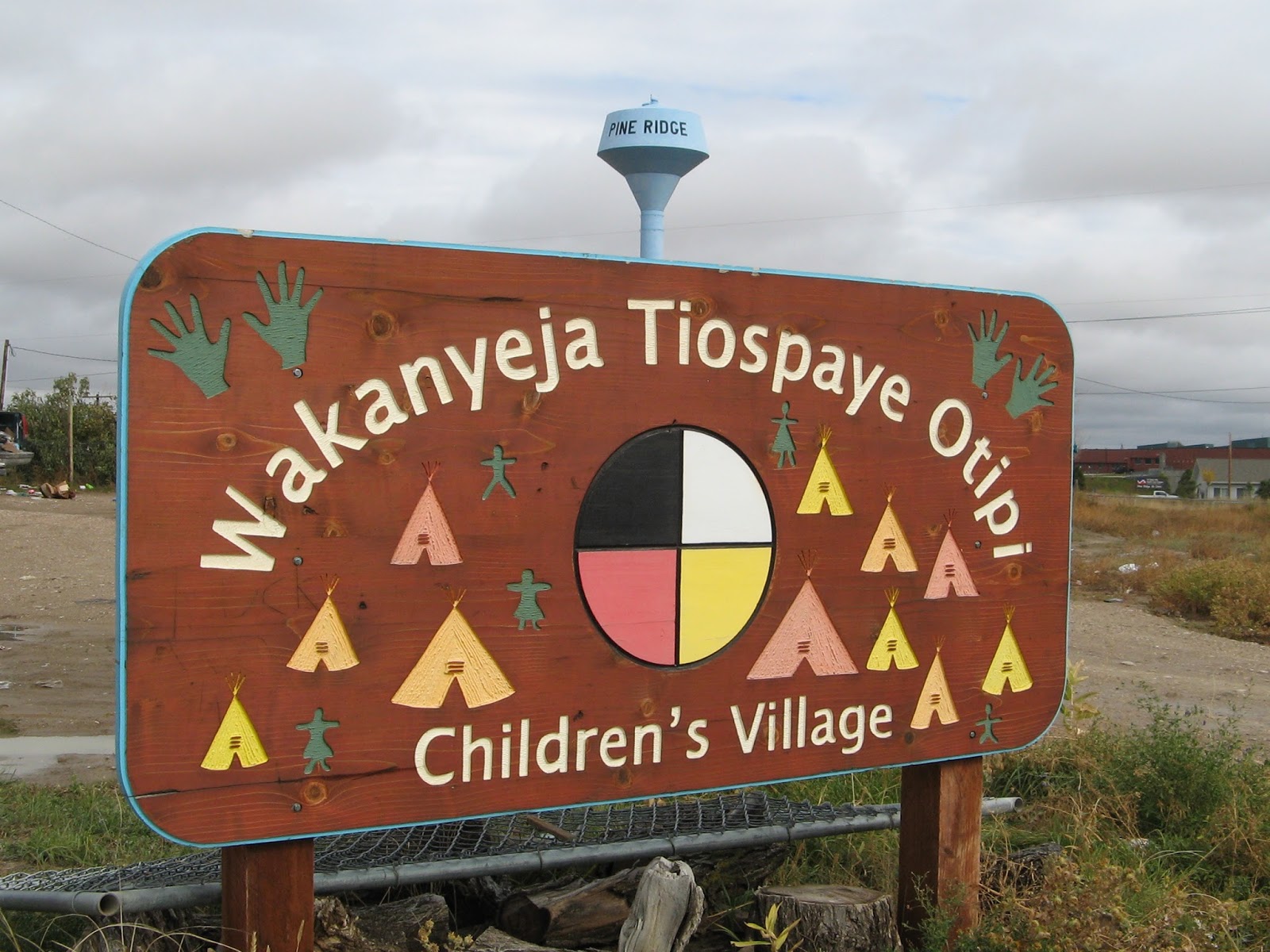
Children's Shelter in Pine Ridge. Most are here because
of alcohol-related abuse and neglect
The upcoming months will be a time of trials and tribulations for the entire Lakota community. It will be a time to set aside political and personal opinions regarding the legalization of alcohol sales and instead, formulate a plan to educate their people on how to drink responsibly; a concept that is foreign to them at this point.


Sunday, August 11, 2013

Tribute to Floyd "Red Crow" Westerman


Last weekend, rain streamed down my windows, and deciding to make good use of my time inside, I purged my filing cabinet—a tedious task I undertake several times per decade. Pulling each file, I look at each piece of paper to decide if it is a toss or a keep, and treasured memories are usually rediscovered.

Among the accumulated newspaper and magazine clippings, I found an article written in 2006 by Frank John King III, editor and publisher of Native Voice. His editorial, "Violence Systemic among Native People", was about the shooting of two girls by five Indian teens in the North Rapid area of Rapid City, South Dakota. King had been following the story, hoping for the capture of the perpetrators, and was disheartened to learn the girls were shot by Indian youths. He wrote, "In my opinion, if you commit an extreme act of violence against any tribal member you should be banished from the tribe. The sickness needs to be removed in order to heal the community."

Attached to his article were notes I had jotted down during a conversation with Floyd Red Crow Westerman in January 2007. I had called Floyd to say hi because I always enjoyed talking to him, but also to specifically talk about the concept of reinstating banishment. We talked for more than an hour about the growing problems encountered by the youth in Indian Country; this being a topic he was passionate about.

Floyd made a significant impact on the world. He was best known to the general public for his many movie and television roles: "Renegades," "Dances with Wolves," "The Doors," "Hidalgo," "Lakota Woman: Siege at Wounded Knee," "Grey Owl," “Walker, Texas Ranger,” and “X-Files,” to name a few.  Others knew him as an activist who supported the Rainforest Foundation Project and as a spokesperson for the Human Rights for Indigenous People of the World. As a musician, he toured worldwide with Sting to raise awareness of the destruction of the Amazon rainforest. On other occasions, he shared the stage with Willie Nelson, Kris Kristofferson, Jackson Browne, and Joni Mitchell.

Floyd and Tracy at the First Americans in the Arts,
Beverly Hills CA 2006
To the Dakota, Lakota, and Nakota he was a distinguished elder who possessed a wealth of knowledge regarding the history of his people. His recognition, and understanding, of treaty rights made him an invaluable leader in the American Indian Movement.

“Banishment,” Floyd said, “was the strongest punishment imposed on a tribal member. It was very effective because the shame of being ostracized from their tribe was intolerable, and in the old days, they had nowhere else to go. They wouldn’t be accepted into any other tribe. I don’t think it would work today because it is the environment that has failed them. The pop culture and loose morality that they are exposed to everyday has become more important to them than their traditional values. It is shameful the way some of our young women dress now, in clothing that exposes their body parts. This is not our way. Our women are a sacred part of all life, and the music that the young people listen to now destroys this belief. Song lyrics and videos portray women as sex objects, and name-calling is prevalent.”

I asked Floyd, “How can the Indian culture be kept alive for the young people who want to blend in with their non-Indian peers?”

He said, “They are typical children. They want to be popular. They want to be cool. The reality is that Native Americans working in motion pictures must create their own opportunities, and think about the impact on future generations. They need to reshape their cinematic image. We shouldn’t bend to mainstream films and how Hollywood wants to present us. We need to look at what our young people are watching and listening to and integrate our cultural beliefs into this. Our traditions must be kept alive, and film gives us this opportunity.”

His words, spoken over six years ago, still ring true today, and I wonder, who will be the next great spokesperson for Indian youth? Who will produce a film that proudly portrays the traditional values of the American Indian?

This post is a tribute to Floyd Red Crow Westerman who passed away in December 2007. It does not commemorate any particular date, milestone, or occasion relating to his noteworthy life, it was triggered only by a day spent cleaning out files and a conversation I felt compelled to share. I had many discussions with Floyd in the brief years that I knew him, and the take away was always a profound awareness of his wisdom and the world that we live in.


Sunday, June 2, 2013

Be a Man and Be a Leader


Mkb
Debra White Plume's arrest at the White House, August 2011
This is my friend of fifteen years, Alex White Plume. I have known him to be wise, fair, kind, generous, and always, peaceful. He is the proud tunkasila of his ever-expanding tiospaye, and  his wife, Debra White Plume, is a politically active matriarch.

Debra has been opposing uranium mining, tar sands oil mining, and specifically, the Keystone XL pipeline, for many years. She has traveled nationwide to attend protests and was arrested in 2011 at a peaceful sit-in held in front of the White House. She has been steadfast in voicing her concerns about the environment and our water resources. She and Alex created Owe Aku (Bring Back the Way), an organization for the protection of treaty rights.

Debra White Plume (right) at Eagle Butte, SD protesting Keystone XL.
Debra White Plume, right
More recently, they have also been instrumental in Moccasins on the Ground, a grass roots NVDA (non-violent direct action) organization for directing social change. Both organizations oppose the destruction of land and water resources and encourage the Lakota people to return to traditional ways as a sustainable people, living in harmony with Unci Maka (grandmother earth) and to explore options for survival outside of relying on the Federal Government for their existence.

On May 24, 2013, I read an article in the Rapid City Journal that shocked me. It detailed a mock emergency drill held  in the Hot Springs School District. The exercise, which involved 800 students, the school district, Fall River County officials, and a bomb squad, was held based on a scenario in which the school district received a letter from a group that wrote "things dear to everyone will be destroyed unless continuation of the Keystone pipeline and uranium mining is stopped immediately." The scenario blatantly portrayed the tar sands and uranium activists as terrorists.

This is so wrong on so many levels. When, and why, did activists become labeled as terrorists? When did it become okay to instill fear of activism in our children? Why is it wrong to oppose the rape of our land? For administrators and educators to willingly, and knowingly, encourage children to believe that concerned citizens are evil members of society is outrageous propaganda and a terrible injustice to all environmental coalitions.

We should be encouraging our children to become environmental activists and stand up to corporate greed on behalf of grandmother earth. Activists are some of the most courageous people I know. They have strong moral and political convictions and will defend their beliefs at all costs. They are rarely paid for their long hours and often mistreated by the media and law enforcement. They are guardian angels for our planet and for human rights and to suggest that they are someone to be feared, greatly angers me.

The Keystone XL Pipeline would eventually destroy the already rapidly draining Ogallala Aquifer and other waters along its way, the oil will not benefit the American people, the money will go directly into the bloated bellies of oil and gas corporations, and it violates First Nations rights. Facts.

The Keystone XL Pipeline will be good for the economy and will not harm the environment. Lies.


I applaud all the people who have not, and will not, give up on their opposition of the Keystone XL pipeline. Thank you for your diligence.

Fall River County, South Dakota, you need to apologize. Obama, you need to listen.

Tuesday, April 9, 2013

Uh Oh, You've Been Unfriended

 
  1. Offensive Comments
  2. Don’t know them well
  3. Trying to sell me something
  4. Depressing comments
  5. Lack of interaction
  6. Political comments
  7. Breakup / divorce
  8. Don’t like their friends
  9. Update profile too often
  10. They add too many people
According to a survey by nmincite.com, these are the top ten reasons people unfriend on Facebook. I recently realized that I had been unfriended, and I knew, due to the timing and comparison of our posts, that the unfriending was reason #6, political comments. This is not my first unfriending, and although I merely speculated about the other two, they also pointed to reason #6. I do keep track of my friends because the number is manageable, and my main reason for socializing on Facebook was to maintain contact with family and friends, which, according to the aforementioned study, is the objective of 89% of people on Facebook. Notice I said was? If anyone had told me ten years ago that I would be posting political commentary in a blog or engaging in conversations with activists via social media, I would have shrugged it off as highly unlikely. I have always been rebellious, but until recently, I have never been one to take a strong political stance.

This recent unfriending prompted me to ask myself, "Why am I using social media?" The answer came quickly and easily - because it is an accepted platform that enables me to express my opinion about all that is important to me in life. My list began with family and friends, but has grown to include writers, publishers, artists, advocates, activists, and yes, even radicals. And I love and/or admire each and every one of them for who they are and what they stand for. And who they are, and what they stand for, does not have to fit precisely into what I believe for I have always believed that the world would be a very boring place if we all thought exactly alike.

I'm not sorry that my liberal postings and bleeding heart comments have caused me to lose friends on Facebook, because that is who I am, and I prefer controversy to remaining silent. Bending to the beliefs of others or subscribing to rhetoric based on hasty generalizations are not my style. I'm passionate about bringing the truth to light and my writing will typically incorporate deductive reasoning, sometimes inductive reasoning, but it is never based on argumentum ad populum, i.e., "everyone knows that a true American would never be in favor of gun control."

Social media has more than its fair share of misrepresentation and fallacious data. Aside from blatant fabricated information, the fact remains that when we communicate this way, we open ourselves up to the perception of the individual reading the post or tweet. I am not offended by anyone who disagrees with me unless their viewpoint violates basic human rights and oversteps the boundaries of common decency. My hope is that my writing reflects who I am as a person, and that others will have a clear idea of what I believe in. They can choose to agree or disagree, respect me or not, even unfriend me if they wish. It does not matter as long as we have a forum where we can voice our opinions, express our concerns, and are given the right to choose our very own circle of friends. Wikipedia defines democracy as "a form of government in which all eligible citizens have an equal say in the decisions that affect their lives." And that, is much more important than a difference of opinion.


Sunday, February 10, 2013

Eviction of the Kayapo

The Kayapo have lived for centuries along the Xingu River in the Amazon River basin; a fragile ecosystem in Brazil's tropical rainforest. For over two decades, the Kayapo tribe has been fighting to save not only their homeland, but their lives. Their fight is Para Belo Monte - Stop Belo Monte. A dam proposed in the 70s and designed in the 90s, the devastating construction began in 2010. It will be the world's third-largest hydroelectric dam. The Belo Monte Dam will not only destroy thousands of acres of rainforest, but will flood several hundred thousand acres and displace approximately twenty thousand Kayapo. Without a census, it is hard to know the exact number that live in the rainforest, but some estimate the various tribal populations to be as high as forty thousand.
The Xingu River, Home to the Kayapo

International conservation groups, environmental and human rights organizations, and celebrities have stepped up and fought alongside the Kayapo to save this unique tract of the Amazon rainforest.

The World Bank has denied that they provided funding for the dam with the US $1.3 billion loan they approved for Brazil. The loan's disclosed environmental protection terms were very vague; raising concern among opponents that a portion of this money could be used for the Belo Monte dam.
(Photo at right courtesy of International League of Conservation Photographers)

Figure 1.
Xingu Basin Indigenous Lands

In August 2012, a Brazilian court ordered an immediate halt to the construction which had begun in 2010 after former President Luiz Inacio Lula da Silva signed a $17 billion contract with Norte Energia, a consortium comprised of eighteen companies responsible for the implementation of the project.

Judge Souza Prudente ordered the 2010 halt after ruling "lawmakers erred in not seeking input from the indigenous communities beforehand." The cease and desist was considered a major win for the Kayapo, but their victory was short-lived. Norte Energia and the Brazilian government are determined to construct the Belo Monte Dam and with a multi-billion dollar price tag at stake, it is easy to comprehend their partnership. Within weeks of the halt, and with current President Dilma Vana Rousseff's blessing, work proceeded on the dam even though study after study has arrived at a similar conclusion: the dam will be ineffective in producing energy-efficient electricity to the Brazilians. These studies lead oppositional groups to believe the real intent of the dam is to assist mining.
The Kayapo are in danger. The plan is to relocate them to an urban housing area where they will be assimilated into modern society. In recent years they have been introduced to processed sugar and alcohol, which their bodies cannot tolerate or metabolize, and diseases which they have no immunity against. American Indians will recognize the strategy that is being used to destroy a traditional culture and cause an independent environmentally sustainable society to become dependent on the government for food and shelter, weakening them with the insidious afflictions of diabetes and alcoholism.

Kayapo and Brazilian militia conflict


The websites below offer insight and facts surrounding the destruction of the rainforest and the plight of the Kayapo. Donations to these non-profit organizations are legitimate and worthwhile. I have been a member of RAN - Rainforest Action Network for many years, but The Nature Conservancy, World Wildlife Fund, Conservation International, and Greenpeace are all excellent organizations. These organizations, through advocacy, education, and awareness are both directly and indirectly responsible for a major decrease in deforestation of the rainforests in the past several years, but it is a continual battle that must never cease.


http://www.amazonwatch.org
http://conservation.org
http://nature.org
http://ran.org
http://wild.org


Saturday, November 3, 2012

Just One More Political Commentary


I have friends and family who will be voting for Mitt Romney on November 6th and I will not  alienate them by discussing our political differences, but I have to question if they understand what is at stake in this election. There are issues common to almost every election; the federal deficit, unemployment, health care, and social security, but in this election there is an issue that, for me, stands above all the others and that is women's rights. I do not want a president whose policies will catapult women back in time. I remember the 60s and 70s when women fought for equal pay, when the Supreme Court made the decision to legalize abortion in Roe vs Wade, and legislators passed laws making it a criminal offense for a husband to abuse his wife. I have advocated for and counseled women who have been raped and abused and I fear that if the Romney Ryan Republican ticket wins, a chauvinistic backward view of women and women's issues will resurface.

Romney has said he will overturn Roe vs Wade and has endorsed a "personhood" initiative treating a fertilized egg as a legal person. That could lead to murder charges for an abortion, even to save the life of a mother. He has promised to withdraw all federal funding of Planned Parenthood, which, contrary to popular belief, provides numerous health services to women, including HIV/AIDS testing and cancer screening. The unfortunate result of defunding could be that more women may die of cervical and breast cancer and AIDS.

I have followed the Republican's war on women since the start of this election year, beginning with Rick Santorum's extreme stance on birth control. Santorum said, "One of the things I will talk about, that no president has talked about before, is I think the dangers of contraception in this country....It's not okay. It's a license to do things in a sexual realm that is counter to how things are supposed to be."  The fact is that 99 percent of sexually active women in the United States have used some form of birth control and Santorum wanted to ban all contraception.

Romney recently endorsed Republican Richard Mourdock in the Indiana Senate race with a widely publicized web video declaring, "With so much at stake, I hope you'll join me in supporting Richard Mourdock for U.S. Senate." On October 23, 2012,  Mourdock  said, "And I think even when life begins in that horrible situation of rape, that it is something that God intended to happen." Four out of five Americans believe that a woman should be able to get an abortion if her health is endangered, or if the pregnancy is the result of rape.

And then there is Todd Aiken's outrageous comment, "If it’s a legitimate rape, the female body has ways to try to shut that whole thing down," he said. "But let's assume that maybe that didn't work or something. I think there should be some punishment, but the punishment ought to be on the rapist and not attacking the child." His entire statement is preposterous, but the most insulting word here is "legitimate".

Given these views by Republicans running for office this year, I believe it is fair to say that there is a Republican war on women and I urge everyone to think about these issues when they enter the voting booth on Tuesday. These issues affect men and women alike. I know not all men subscribe to these radical Republican views and they do care about the reproductive health of their wives, daughters, girlfriends, friends, and family members.

Women, when you vote, think about how you feel about your rights. Men, think about all the women you love.


Sunday, October 14, 2012

A Brave Fight for Women's Rights


"Any female that, by any means, plays a role in the war against the mujahedeen," Ehsan declared, "should be killed." 

Five days ago, a fourteen-year-old girl was shot in the head and neck while riding in a school bus. She is currently fighting for her life in a military hospital in Pakistan.The shooters? The mujahedeen. Her offense? Blogging about her right, and the right of all girls, to attend school. Malala Yousafzai has been blogging since the age of eleven when she began to journal her personal struggle to get an education. Her diary was published by the BBC after the Taliban announced that girls will not be allowed to attend school and declared the education of girls to be "un-Islamic." The ban affected Malala's schooling in Swat Valley, Pakistan.

Malala Yousafzai treated by army doctors
Malala Yousafzai, a Pakistani teenager shot by the Taliban after advocating education for girls, is treated by army doctors. Photograph: Ispr Handout/EPA
The mujahedeen are Islamic guerilla warriors belonging to a radical movement that dates back to the mid-1800s, originating in the remote mountains of Afghanistan. They believe they are engaged in a battle of faith, or jihad, a holy war. Although the Taliban was forced out of Swat in 2009, they have publicly admitted responsibility for the shooting, in what most believe is an attempt to announce their continued presence and commitment to violence in their barbaric war against women.

In the United States, a geographical location that ends or begins in 'valley' typically conjures up images of skiing, wealth, and social status. The Swat Valley, where Malala lives, used to boast about being Pakistan's only ski resort, but it is now one of the most violent regions in Pakistan due to the irrepressible influence of the Taliban. Mujahedeen militants continue to spill over from the Afghanistan border and, as evidenced by Tuesday's cold-blooded shooting, are intent upon enforcing their Islamic fundamentalism upon the women of Pakistan.

Malala, a remarkably brave girl, now joins the rank of women who, in their heroic attempt to bring about change for womankind, have fallen victim to cowards.